What Today’s Economic Signals Mean—and Whether We’re in a Recession
With ongoing headlines about inflation, market volatility, consumer sentiment, and slowing economic growth, many people in Erie, PA and across the country are asking the same question: Are we in a recession? The answer is more complex than it may seem. Economists rely on a broad range of data, not just one statistic, to determine the health of the economy. Understanding these indicators can help investors stay grounded and focused—especially during periods of uncertainty.
At TBaer Wealth Management, we believe that informed financial planning, a safer‑money mindset, and a long‑term perspective are essential to navigating volatility. Below is a clear look at what economists are watching, how these trends may influence markets, and what it means for your wealth planning and retirement strategy.
A Recession Is More Than Two Negative GDP Quarters
Many people are familiar with the idea that a recession occurs when gross domestic product (GDP) declines for two consecutive quarters. While this rule of thumb can provide some insight, it isn’t the official definition. The National Bureau of Economic Research (NBER)—the organization responsible for declaring recessions—evaluates a much broader set of economic data.
NBER looks at several key areas, including:
- Employment trends and job market strength
- Consumer spending patterns
- Business activity and investment
- Industrial production
- Personal income levels
Rather than focusing on a single statistic, NBER aims to understand the full economic picture. This means the official recession designation often comes after months of data review—not based solely on GDP or market performance.
Some Economic Indicators Remain Relatively Resilient
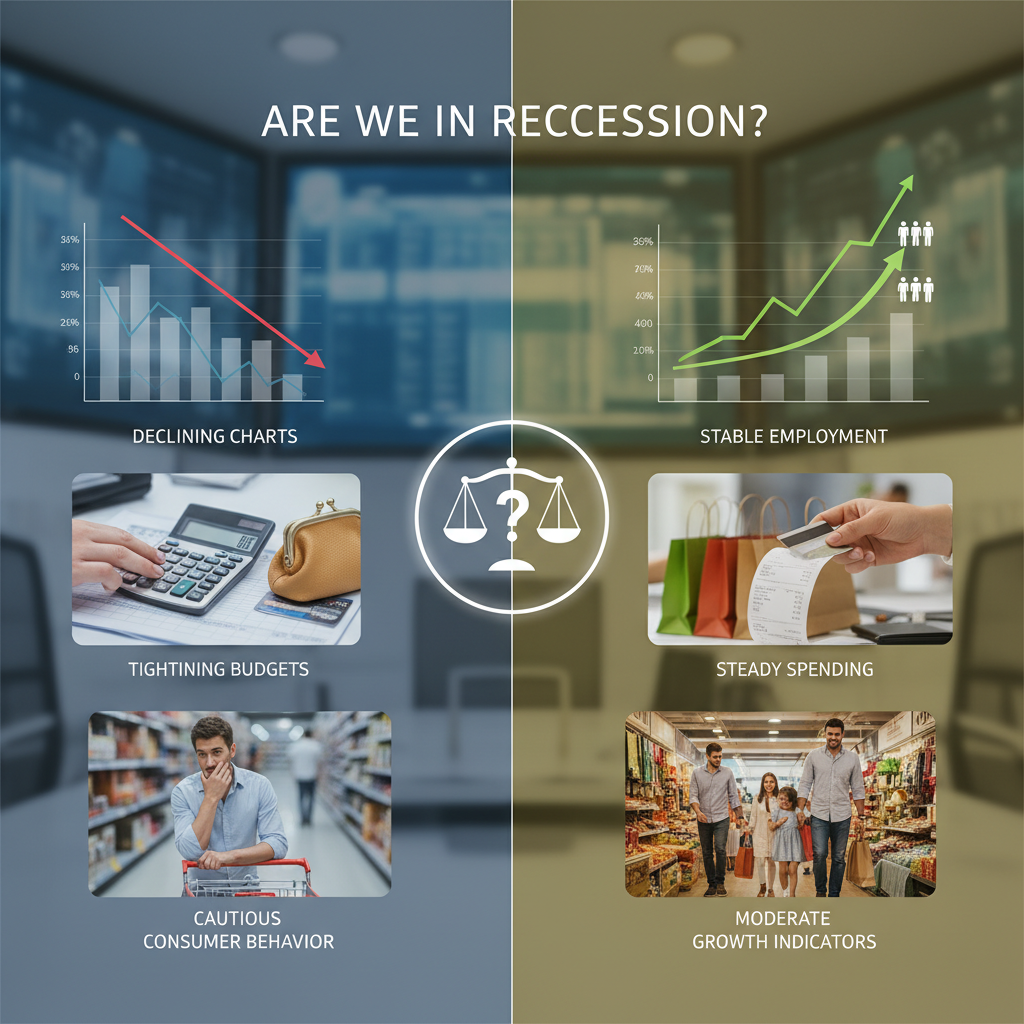
Despite concerns about slowing economic growth, several components of the economy continue to show stability. Unemployment levels remain relatively low by historical standards, and in many sectors, consumer spending has held steady. Certain industries have maintained stronger‑than‑expected demand, even with higher interest rates and tighter financial conditions.
At the same time, economic slowdowns are rarely uniform. Some households and industries may feel pressures sooner than others. This unevenness contributes to ongoing debates among economists and investors about the depth and direction of the economic cycle.
For clients focused on retirement planning in Erie, PA or working toward long‑term wealth goals, we emphasize understanding these nuances rather than reacting to isolated data points. A thoughtful, goals‑based strategy tends to serve investors better than trying to predict every economic shift.
Inflation and Interest Rates Continue to Shape the Economic Outlook
Inflation has played a central role in recent economic discussions. Although inflation has moderated from earlier peaks, elevated prices continue to influence both household budgets and business expenses. The Federal Reserve remains highly attuned to inflation trends, monitoring everything from wage growth to energy costs as it evaluates future interest rate decisions.
Higher interest rates affect:
- Borrowing costs for businesses and consumers
- Housing and mortgage demand
- Investment decisions
- Economic growth expectations
Global events—including geopolitical tensions and energy market disruptions—can add further complexity to inflation forecasts. These ripple effects can influence both short‑term market reactions and longer‑term economic performance.
As part of our role as a financial advisor in Erie, PA, we help clients navigate how inflation trends may influence investment planning, retirement timelines, and the allocation of accounts such as 401k plans, IRAs, Roth IRAs, and Traditional IRAs.
Consumer Confidence Remains a Key Economic Driver
Consumer confidence is another major factor economists monitor. Sentiment surveys capture how individuals feel about their financial situation, job stability, and expectations for the future. When consumers feel uncertain, spending may slow—impacting businesses and the broader economy. Because consumer spending makes up a significant portion of U.S. economic activity, shifts in sentiment can influence growth trends.
However, it’s important to remember that periods of uncertainty do not automatically point to a recession. The economy naturally experiences phases of acceleration and deceleration, and caution among consumers often reflects shifting expectations rather than a definitive economic downturn.
Markets and the Economy Don’t Always Move Together
A common misconception is that the stock market and the economy move in lockstep. In reality, markets are forward‑looking: they respond to expectations, potential risks, and emerging opportunities. Economic data, on the other hand, measures current or past conditions.
This means markets can fall during strong economic environments—or rise even when economic data softens. During volatile periods, these mismatches can feel confusing, but they highlight an important truth: investment strategy should be rooted in long‑term goals rather than short‑term reactions.
Our approach emphasizes helping clients build portfolios aligned with their personal timelines, risk tolerance, and retirement planning goals. This alignment is especially important for high‑net‑worth families and individuals preparing for long‑term stability in Erie, PA.
Long‑Term Goals Provide Stability During Uncertain Periods
The reality is that recessions cannot be predicted with perfect accuracy. Economic cycles shift over time, and short‑term volatility is a natural part of investing. For this reason, attempting to forecast every market move or economic indicator can create unnecessary stress and potentially lead to missteps.
Instead, many successful investors focus on foundational principles, such as:
- Maintaining a diversified portfolio
- Keeping appropriate cash reserves for flexibility
- Reviewing risk tolerance periodically
- Staying aligned with long‑term goals and life priorities
- Avoiding emotionally driven financial decisions
At TBaer Wealth Management, we support clients through a structured four‑stage process—goal identification, plan design, implementation, and ongoing monitoring. This approach helps ensure strategies remain aligned with the realities of the market, the economy, and your personal objectives.
FAQ
Are we currently in a recession?
Economists evaluate a broad range of data before declaring a recession. While some indicators have softened, others remain resilient. The full picture—not a single metric—determines whether the economy meets the official definition.
Why do markets react so strongly to headlines?
Markets respond to expectations about the future. News about inflation, interest rates, and global events can influence investor sentiment quickly, even when underlying economic conditions remain stable.
Should I change my investment strategy because of recession concerns?
Most of the time, making sudden changes in response to uncertainty is not advisable. It’s best to review your long‑term goals and consult a financial advisor before making adjustments.
How do interest rates influence the economy?
Interest rates affect borrowing costs, business investment, housing activity, and market conditions. Changes in Federal Reserve policy can influence both economic growth and investor behavior.
How can TBaer Wealth Management help during periods of uncertainty?
We provide disciplined, personalized financial planning and investment guidance to help clients maintain confidence—whether preparing for retirement, growing wealth, or assessing safer‑money solutions.
If you’d like to review your financial plan, portfolio, or retirement strategy, our team is here to help you navigate the path forward with clarity and confidence.